|
|
|
Detailed Answers for Test 2 |
|
Question 1 |
|
This Question Does not have a Detailed Solution |
|
|
|
Question 2 |
|
This Question Does not have a Detailed Solution |
|
|
|
Question 3 |
|
This Question Does not have a Detailed Solution |
|
|
|
Question 4 |
|
This Question Does not have a Detailed Solution |
|
|
|
Question 5 |
|
This Question Does not have a Detailed Solution |
|
|
|
Question 6 |
|
This Question Does not have a Detailed Solution |
|
|
|
Question 7 |
|
This Question Does not have a Detailed Solution |
|
|
|
Question 8 |
|
This Question Does not have a Detailed Solution |
|
|
|
Question 9 |
|
This Question Does not have a Detailed Solution |
|
|
|
Question 10 |
|
This Question Does not have a Detailed Solution |
|
|
|
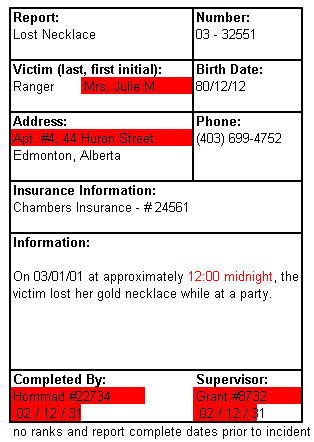
Question 11 |
|
|
|
 |
|
Question 12 |
|
|
|
|
|
Question 13 |
|
|
|
|
|
Question 14 |
|
|
|
|
|
Question 15 |
|
|
|
|
|
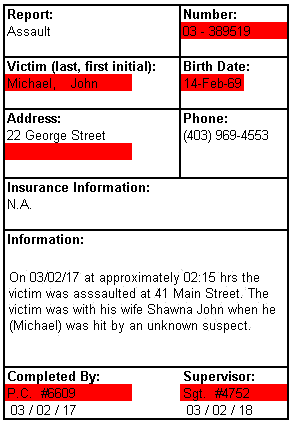
Question 16 |
|
|
|
 |
|
Question 17 |
|
|
|
|
|
Question 18 |
|
|
|
|
|
Question 19 |
|
|
|
|
|
Question 20 |
|
|
|
|
|
Question 21 |
|
This Question Does not have a Detailed Solution |
|
|
|
Question 22 |
|
This Question Does not have a Detailed Solution |
|
|
|
Question 23 |
|
This Question Does not have a Detailed Solution |
|
|
|
Question 24 |
|
This Question Does not have a Detailed Solution |
|
|
|
Question 25 |
|
This Question Does not have a Detailed Solution |
|
|
|
Question 26 |
|
|
|
 |
|
Question 27 |
|
|
|
 |
|
Question 28 |
|
|
|
 |
|
Question 29 |
|
|
|
 |
|
Question 30 |
|
|
|
 |
|
Question 31 |
|
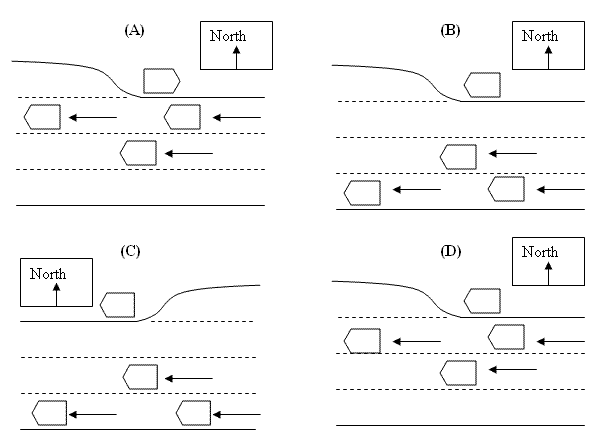
ANS: B –Option A can be eliminated because the stopped vehicle is facing westbound and the moving vehicles are located in the outside (curb) and centre lanes. Option C can be eliminated because the vehicle on the shoulder is west of an on-ramp. Option D is incorrect because the moving vehicles are located in the centre and outside (curb) lanes. Option B is the best option. |
|
 |
|
Question 32 |
|
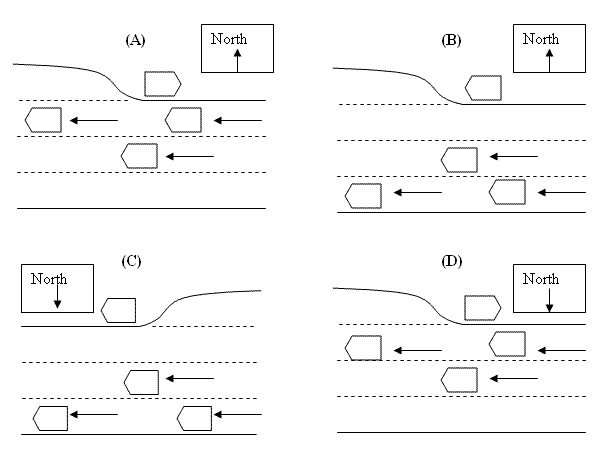
ANS: C –Option A only has one vehicle facing east (on the shoulder). All of the vehicles in option B face west. Option D has three vehicles facing east, but the fourth on the shoulder is facing west. In option C all four vehicles are facing east. |
|
 |
|
Question 33 |
|
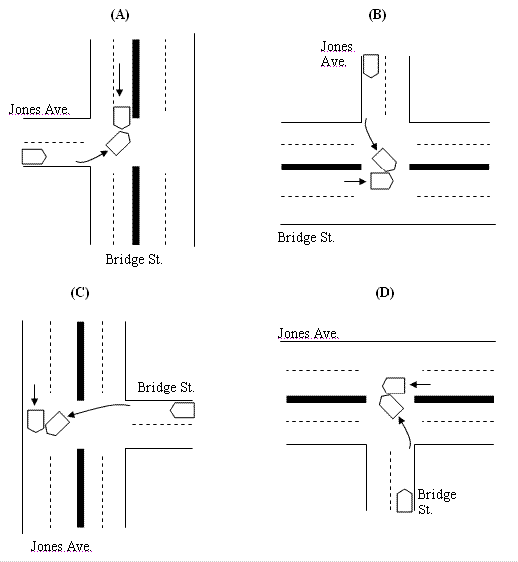
ANS: D – Options A & B can be eliminated because the vehicle making the left turn is doing so from Jones Ave onto Bridge Street when it should be the opposite. Option C is inaccurate because the collision is supposed to take place in the inside (centre) lane on Jones Ave, not the outside (curb) one. |
|
 |
|
Question 34 |
|
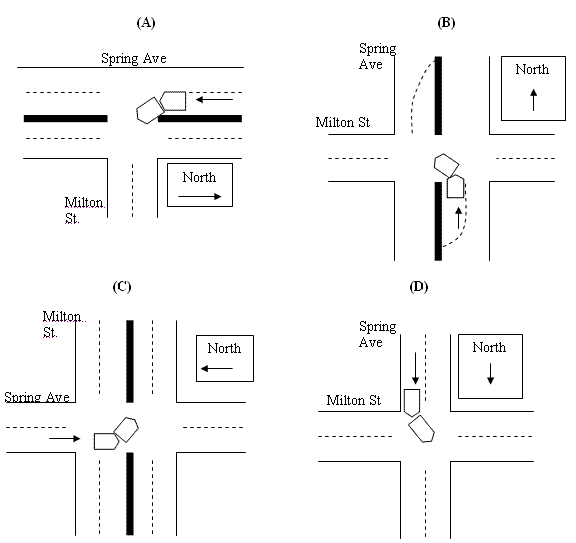
ANS: A – In diagrams B and D the vehicles are headed northbound when they are struck. In diagram C, the vehicle is in the southbound lane, but is not technically in the inside (centre) lane. Option A would be the best selection. |
|
 |
|
Question 35 |
|
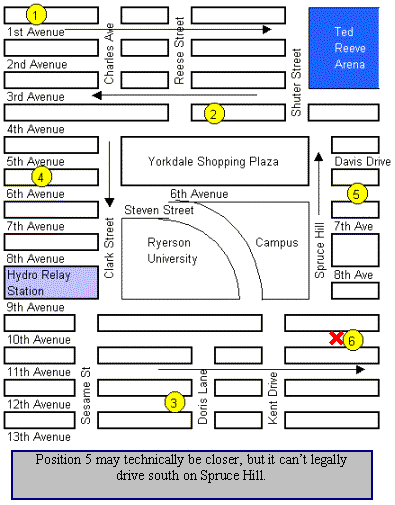
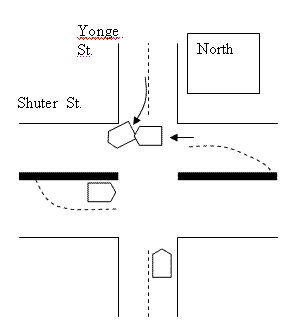
ANS: C – The two cars involved in the collision are facing south. If the vehicle stopped on Yonge Street was facing north, than the vehicle stopped on Shuter Street would have to be facing east. If the vehicle on Shuter Street were facing north, that would make the vehicle on Yonge Street facing west. This satisfies the constraints of the question. Therefore Shuter Street is a north / south street and the vehicles facing the opposite direction of the stopped vehicle must be travelling south. |
|
 |
|
Question 36 |
|
Developing others is one of the key competencies for being a police officer. By failing to help the officer, or by doing the report yourself, the other officer will fail to learn how to effectively complete the task themselves. If you take the time now, the officer will become self reliant, and will also be in a position to assist other officers if the need arises. Cooperation is another key competency. Police officers depend on each other not just in emergencies, but also to understand other important aspects of the job through information sharing and mentoring. Work organization is also a key competency, and although it is not an option here, another good answer may be to provide the officer with a copy of your report that you have stored for future reference, along with instructions on how it should be filed. Developing your own personal procedure manual is very effective. In this case answer A would be the strongest. |
|
|
|
Question 37 |
|
Concern for safety should be considered in this scenario, including the concern for the safety of fellow officers and the public. Even though there are other units responding, the scenario specifically states that the location is extremely close, and you may be the fastest responder. Initiative is also a relevant competency and in emergency situations like this, initiative would be required. Option B is the best answer. |
|
|
|
Question 38 |
|
By recommending that you both remain on the road for the time being you are demonstrating concern for safety, initiative, and cooperation / developing others. |
|
|
|
Question 39 |
|
It is important when attaining information from informants that you keep your word. If you don't it will be difficult to gain information later. The stolen vehicle is more important to you then the original drug charge, otherwise you wouldn't have made the deal. You should keep the dealer until the investigation is over to prevent him from disclosing your position. |
|
|
|
Question 40 |
|
The scenario is a little more complicated without an understanding of police powers. The situation should be investigated immediately and you should seek more information before making any major decisions such as releasing or forcing confessions. The next best source of information would be your dispatcher. |
|
|
|
Question 41 |
|
Your number one priority is preservation of life. All other matters can wait, even if it’s inconvenient sometimes. |
|
|
|
Question 42 |
|
This is the most direct and efficient means of alerting the woman that she has exposed money that could easily be stolen. |
|
|
|
Question 43 |
|
Officers will be looking for the male in the area. If you provide the above description, they will have a greater chance of apprehending the male. Descriptions that are covered are useless, descriptions of the victim are irrelevant and habits may not be quickly observable. |
|
|
|
Question 44 |
|
Work organization and cooperation would be behind this decision. Policing is about working together as a team. You are required for court and should attend. There is no reason another officer can't perform the photo line-up. This will allow you to perform all tasks that are required. Option D is the best choice. |
|
|
|
Question 45 |
|
Integrity is an important component of being a police officer. If you made a mistake and admit to it, there is nothing that a defence lawyer can do to you after that. Lying under oath should never be considered. Option C is the best answer. |
|
|
|
Question 46 |
|
Work organization and initiative competencies would be accomplished by taking the time to call the witnesses and inform them of the situation. This event impacted their life far more that it would yours, and they have a right to know the outcome. |
|
|
|
Question 47 |
|
You must not act to hastily in this situation. The daughter has only been absent an hour. You should make sure she is missing before attaining a description or beginning a search. |
|
|
|
Question 48 |
|
Police are required to investigate suspicious incidents and preserve life. An elderly woman living alone could be in serious danger if she fell and hurt herself. This warrants immediate action on your part to ensure that she is safe inside. |
|
|
|
Question 49 |
|
Preservation of life is the most important duty a police officer has. Once you attend the scene and confirm that there is a man in need of medical attention, you would begin to assist and call for the paramedics. |
|
|
|
Question 50 |
|
Allegations such as this are best immediately confronted and should not impair you in the course of your duties. Once you explain why you stopped the vehicle, you should continue your duties as you see fit. |
|
|
|
Question 51 |
|
|
|
 |
|
Question 52 |
|
|
|
 |
|
Question 53 |
|
|
|
 |
|
Question 54 |
|
|
|
 |
|
Question 55 |
|
|
|
 |
|
Question 56 |
|
|
|
 |
|
Question 57 |
|
|
|
 |
|
Question 58 |
|
|
|
 |
|
Question 59 |
|
|
|
 |
|
Question 60 |
|
|
|
 |
|
Question 61 |
|
|
|
 |
|
Question 62 |
|
|
|
 |
|
Question 63 |
|
|
|
 |
|
Question 64 |
|
|
|
 |
|
Question 65 |
|
|
|
 |
|
Question 66 |
|
This Question Does not have a Detailed Solution |
|
|
|
Question 67 |
|
This Question Does not have a Detailed Solution |
|
|
|
Question 68 |
|
This Question Does not have a Detailed Solution |
|
|
|
Question 69 |
|
This Question Does not have a Detailed Solution |
|
|
|
Question 70 |
|
This Question Does not have a Detailed Solution |
|
|
|
Question 71 |
|
This Question Does not have a Detailed Solution |
|
|
|
Question 72 |
|
This Question Does not have a Detailed Solution |
|
|
|
Question 73 |
|
This Question Does not have a Detailed Solution |
|
|
|
Question 74 |
|
This Question Does not have a Detailed Solution |
|
|
|
Question 75 |
|
This Question Does not have a Detailed Solution |
|
|
|
Question 76 |
|
This Question Does not have a Detailed Solution |
|
|
|
Question 77 |
|
This Question Does not have a Detailed Solution |
|
|
|
Question 78 |
|
This Question Does not have a Detailed Solution |
|
|
|
Question 79 |
|
This Question Does not have a Detailed Solution |
|
|
|
Question 80 |
|
This Question Does not have a Detailed Solution |
|
|
|
Question 81 |
|
|
|
 |
|
Question 82 |
|
|
|
 |
|
Question 83 |
|
|
|
 |
|
Question 84 |
|
|
|
 |
|
Question 85 |
|
Three of the groups follow the pattern of skipping one letter between the first three letters and skipping three letters between the third and last. Only “SUWZ” fails to do this as only two letters are skipped between W and Z. |
|
|
|
Question 86 |
|
The sentence requires the preposition “of” to begin the clause “revenge against her attacker”. Sentences #3 and #4 are wordy and unclear. |
|
|
|
Question 87 |
|
This Question Does not have a Detailed Solution |
|
|
|
Question 88 |
|
Sentence #1 fails to make sense. The verb “to be” (is when, are when) is inappropriate in this circumstance. |
|
|
|
Question 89 |
|
Sentence #1 is grammatically incorrect. The proper preposition is “because”. If “from” or “besides” are used then the sentence fails to make sense. |
|
|
|
Question 90 |
|
When a comparative adjective is used between two parties, the correct ending is “-er”. If a modifier is used, it becomes redundant (more stronger) and is inappropriate. |
|
|
|
Question 91 |
|
The correct verb tense for “do not” with a third person singular subject is “doesn’t”. “Quick” as opposed to “quickly” has to be used to describe skills, as it is an adjective describing a noun. |
|
|
|
Question 92 |
|
The correct plural form of “mouse” is “mice”, not “mouses”. The word “proceed” means to “continue on”, while the word “precede” means “to go before”. |
|
|
|
Question 93 |
|
Sentence #1 is redundant, as the word “he” is not required. There is an extra comma in sentence #2. Sentence #3 is obscure and doesn’t make sense. |
|
|
|
Question 94 |
|
The middle clause has to properly refer to the first clause. “Those” replaces “novels”, so the sentence could be written “Mark Twain’s novels, like the novels of many writers…” |
|
|
|
Question 95 |
|
Sentence #4 has the proper tense of the verb for the sentence. |
|
|
|
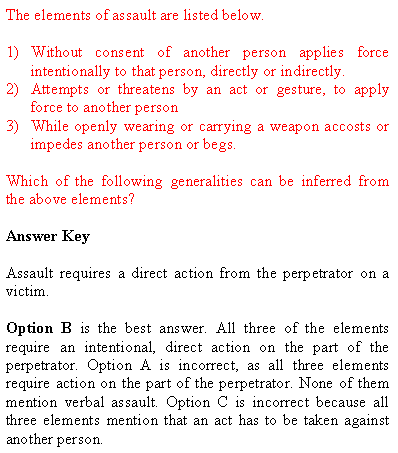
Question 96 |
|
|
|
 |
|
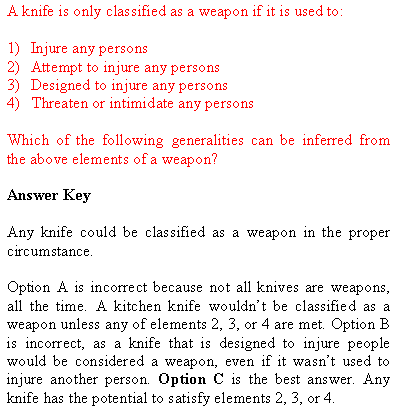
Question 97 |
|
|
|
 |
|
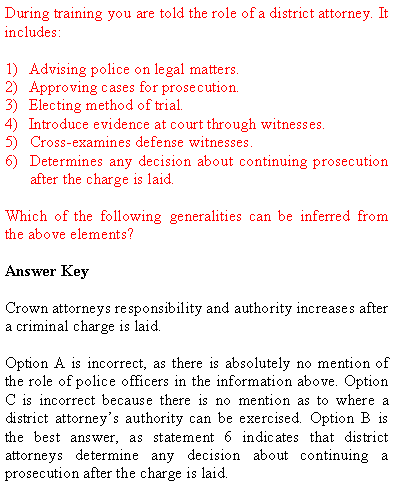
Question 98 |
|
|
|
 |
|
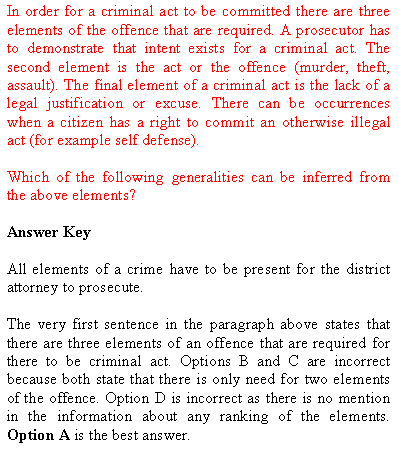
Question 99 |
|
|
|
 |
|
Question 100 |
|
|
|
 |
|
Question 101 |
|
|
|
 |
|
Question 102 |
|
|
|
 |
|
Question 103 |
|
|
|
 |
|
Question 104 |
|
|
|
 |
|
Question 105 |
|
The first priority would be to ensure all points of exit are covered. You would then want to ensure an entry was made prior to searching the building, as there may be no need. The correct order is 3, 4, 2, 1. |
|
|
|
Question 106 |
|
A - Wider Hexagon |
|
|
|
Question 107 |
|
A - Top crown white spot |
|
|
|
Question 108 |
|
A - Black eye |
|
|
|
Question 109 |
|
A - Extra line |
|
|
|
Question 110 |
|
A - Same |
|
|
|
Question 111 |
|
Of the four accounts, the correct answer shares more in common with the other three statements. There are no statements that are not confirmed by other witnesses. |
|
|
|
Question 112 |
|
Of the four accounts, the correct answer shares more in common with the other three statements. There are no statements that are not confirmed by other witnesses. |
|
|
|
Question 113 |
|
Of the four accounts, the correct answer shares more in common with the other three statements. There are no statements that are not confirmed by other witnesses. |
|
|
|
Question 114 |
|
Of the four accounts, the correct answer shares more in common with the other three statements. There are no statements that are not confirmed by other witnesses. |
|
|
|
Question 115 |
|
Of the four accounts, the correct answer shares more in common with the other three statements. There are no statements that are not confirmed by other witnesses. |
|
|
|
Question 116 |
|
This Question Does not have a Detailed Solution |
|
|
|
Question 117 |
|
This Question Does not have a Detailed Solution |
|
|
|
Question 118 |
|
This Question Does not have a Detailed Solution |
|
|
|
Question 119 |
|
This Question Does not have a Detailed Solution |
|
|
|
Question 120 |
|
This Question Does not have a Detailed Solution |
|
|
|
Question 121 |
|
Liaise means to coordinate, communicate or work together. |
|
|
|
Question 122 |
|
Acquittal means exoneration, release or discharge of charges. |
|
|
|
Question 123 |
|
Violated means interrupted, disrupted or prevented from receiving. |
|
|
|
Question 124 |
|
Incarcerate means to imprison or jail someone. |
|
|
|
Question 125 |
|
Sheltered means protected or privileged. |
|
|
|
|